Tuesday, October 1, 2013

Dormancy

I apologize for not putting much of my art up lately, but you have to make art to show it and that's the problem.  I've been, shall we say, distracted and not painting.  This too shall pass.  I've noticed that periods of dormancy are followed by periods of great productivity and creativity.

In the past, I would try to force the creative process or coax a painting or two from the dry well of my creative self.  I would put into place an appointed time to paint each day believing that the practice would elicit the return of the creative impulse.  Sometimes this worked.  Most times it only produced technical paintings without spirit.  The idea being that if I faked it long enough the spirit would return with the practice.  But here is what I've found later in life and in this cycle of my life.  That "pushing through" the dry spells with work that was uninspired was wasted energy.


What I've understood lately is that periods of dormancy are as much a part of my creative experience as winter is to the perennial flower.  Instead of fighting the seemingly harsh weather of a creative winter, why not enjoy the beauty of the stillness and clarity the winter season brings.  A time to reflect, see the creative landscape unclothed and naked. Listen to the silence. To appreciate more fully the spring of renewal that awaits beneath the cold and seemingly dead surface. Are periods of dormancy any less important to the cycle of creativity?  I now know they are every bit as important for renewal.  But for years I have feared them and fought the inevitable.  Read the books and practiced the "cure".  In the end, its a cycle.  I can fight it or settle into it and learn to weather the season!

Thanks for waiting and reading!

Thursday, September 19, 2013

I Speak in Color


As artists we have a lingo.  You know, "Art speak", so to speak!   We talk about composition, values, texture and so on.  Those unfamiliar with our language are confused by our vocabulary.  Some of my Facebook friends post amusing things that have  "math" or "grammar" that sometimes I don't get, because I don't fully understand their "Speak".  We all know and use some language that only those in the know, know!  Some specialized speech with words fully understood only to those who are familiar with their words and ideas.

Within the language of art, I've noticed I speak a particular dialect.  I speak color.  No, not the language of color.  Analogous, primary, hue, chroma, tint are terms used to describe different properties of color.  I mean I speak actual color.  "Look at the Ocher in that wheat field" or "did you see the Viridian shutters on that house?" And "those geraniums are the perfect shade of Scarlet Lake!"  Other artists who paint understand me clearly.  They nod their head in agreement or sometimes chose their own descriptive paint color to further narrow in on the exact hue.  Then we all murmur "oh, yes, much better choice!" As amusing as it may seem, it makes perfect sense to us!    

Yes, I speak in color.  I used to say things like "that's a lovely shade of blue".  Now I use the exact name that corresponds with the tube of color:  "what a lovely shade of ultra marine."  Once when a young lady working for an Italian cruise line told me her name was Azura, I knew not only what her name meant, but that her eyes had inspired her parents to name her that.

But beyond its many names and hues, Color allows us- the visual artist- to express themselves without words.  Color itself speaks.  Besides my speech, I use it to speak through my art.  I use color to reflect a mood or I change natural colors to intensify or exaggerate an element or else dull it to give it less importance in the painting.  Color evokes emotion and sets the tone for a painting.  The many ways and uses for color are too many for this short post, but such a powerful tool needs to be understood to be used well. Like a spoken language we do well when we learn how to use it to communicate our intent as clearly as possible.  I am still learning!  

Just a thought.  


Thursday, August 22, 2013

Balance

So much news from the Studio!  In case you have not seen or heard by one of the various means of communication I've used, it was a busy summer!  I taught Plein Air and Beginning Watercolor at the MAC in Worthington, Sketchbook Journaling and Flowers in Watercolor at the Columbus Cultural Arts Center downtown as well as a summer series in the Studio. 

New also this summer, I began writing for two online art Magazines: Empty Easel and Senior Artist.  I will be contributing every few weeks to Empty Easel with articles that began a several weeks ago on the basics of watercolor. (Click here to read the article.) At Senior Artist I have been writing about Sketchbook Journaling (Click here for the first article, here to read the second, click here to read the third in the series.) and will not be writing for them quite as regularly as with Empty Easel.  A girls got to sleep! 

I published a Facebook Page for my art this summer.  Look for it on Facebook at Michelle Morris Art.  If you LIKE the page it will show in your feed when I post.  The other day I reached and went over the 300 LIKE mark.  Very nice to have so many who are interested in seeing what I do.  Also on Facebook I opened a Daily Sketchworks group.  This is an open group where you can share and see what other sketchers are doing.  Facebook is a fun way to share art with others!  

All this activity has been awesome and new opportunities are a great way to take your creativity to another level.   But all this activity has taught me something.  This girl has learned that even though an opportunity knocks, you don't have to answer the door.  The knock may come again and it may not.  That's the risk.  But I think if I've learned anything from all this new and exciting activity, it's that the art can turn into a by product and not the main reason I do what I do.  To be so busy that I'm not doing MY art makes me unbalanced!  It is only by feeding my own creative spirit that I have the energy and creative life to share with others!

Its pretty basic, so why do I share it?  Because I believe in balance.  I believe that by not honoring what art does for my soul, it's calming quieting effects, the joy and balance the simple act of even drawing a sketch brings to my life, by not honoring that in my life as a part of who I am as a person, well, I cheat myself.  My life is fuller and so much richer with that little sketch today than if I wrote or taught about it forty times.  Don't get me wrong.  Writing and teaching feed my creative side as well and I love them both.  But I think I relearned that you can get lost in good things that take you away from the best thing!  If this blog is for anything, I want it to encourage you to do your ART.  To do it for the love of it.  To do it for you.  Until it becomes such a part of you that you find yourself unbalanced without it!  Go make some art!  

Monday, July 22, 2013

New Empty Easel article

My new writing gig!  Empty Easel is another online art magazine that I will be regularly writing for.  Visit www.emptyeasel.com and subscribe to their weekly preview of the weeks upcoming articles.  


I love all kinds of artistic mediums, but the one I find most exciting and expressive is watercolor. Watercolor gets a bad rap as being hard to control—it’s often considered the hardest medium to work with. But, while it does have more variables than other mediums, that’s what makes it so unique and exciting!

One thing’s for sure, whether you’re just starting out in watercolors, or you’ve been doing it for years, having the right tools can make your job a LOT easier. So, over the next few weeks I’m going to talk about the tools you will need to paint with watercolor, beginning today with brushes.

Are brushes really that important?

Yes! Good watercolor brushes are critical to the success of your paintings. I cannot tell you how often I have a new student who attempts to paint in watercolor using a brush meant for oil or acrylic—always with poor results!

Watercolor paints require the use of water; that’s how the paint color moves around. So a good watercolor brush is made with materials that hold and release WATER! (In other words, a bristle brush will not work.) When you go to buy your brush, ask or look specifically for watercolor brushes. This may seem like a no brainer, but it’s the first key to successfully painting with watercolor.

OK, so now that you’re looking at watercolor brushes only, you’ve narrowed your choices some, but there are still many brushes to choose from. Lets narrow these even further by type, materials and cost.

Types of watercolor brushes

There are several types of watercolor brushes, but rounds and flats are the most common. In my experience a few good rounds and flats will serve you well for 90% of most paintings. Ignore the rest!

Think about the size of brushes you need. One common problem I see new watercolor painters making is using a brush too small for the job. Equip yourself with a variety of brush sizes so you have the right tools for the job. The barest basics would be to start with a #10 round and a #6 round, along with one 3/4 inch flat wash brush.
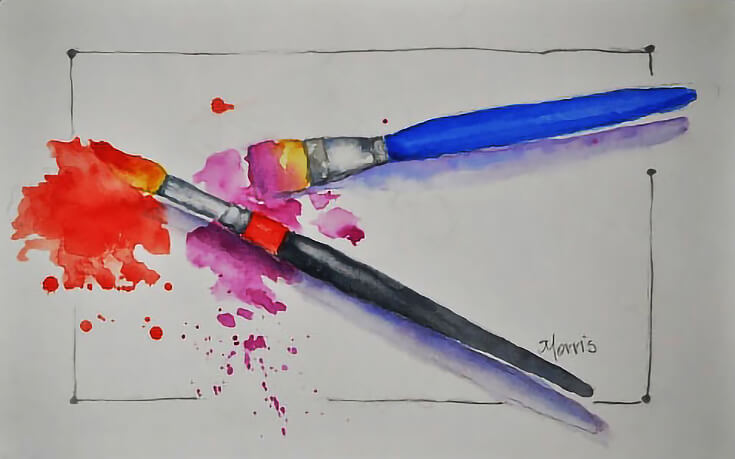
My normal starting recommendation, however, is to pick up three rounds: a #14, #10, and #6. Also pick up two flats (or wash brushes) in 1 inch and 1/2 inch. Specialty brushes are sometimes handy but not at all necessary, so don’t spend money on them when you’re just starting out. As you progress, you’ll probably want to invest in a few riggers, but that’s probably all you’ll need.

What are watercolor brushes made of?

These days the variety of brush materials is great. When I was in school I was told the best brushes were sable because they give you the best results. (They were very expensive, though!) Today the best brushes are still sable and are still expensive, but there are also synthetic brushes and synthetic blends that give equally good results with less expense.

The material you end up with is really personal preference. I know several people who love and use squirrel hair mop brushes. (Personally, I find these hold way too much water for me and for most beginners.) Many other fine watercolorists use only sable hair brushes. I prefer a synthetic brush’s ability to spring back and hold a point. All this comes from painting experience with a variety of different brushes which is why I advise new students to simply choose a good low cost option to begin with.

How much do watercolor brushes cost?

For good mid-range synthetic watercolor brushes, you’ll be paying between $20 to $35, before tax or shipping. And remember, you really need three to six brushes, so it adds up quick!

The good news is, a well-made brush from a good company will last a long time, and spending a little more on brushes will always pay off. I still own a brush that I bought in school 30+ years ago! I got my money’s worth even though back then my only thought was, “How many other things could I have bought with what I paid for this one brush!?”

So my advice is to buy the best brushes your budget can afford. You don’t need to buy them all at once and as you progress you might prefer, as I do, synthetic blends over the very expensive sable brushes.
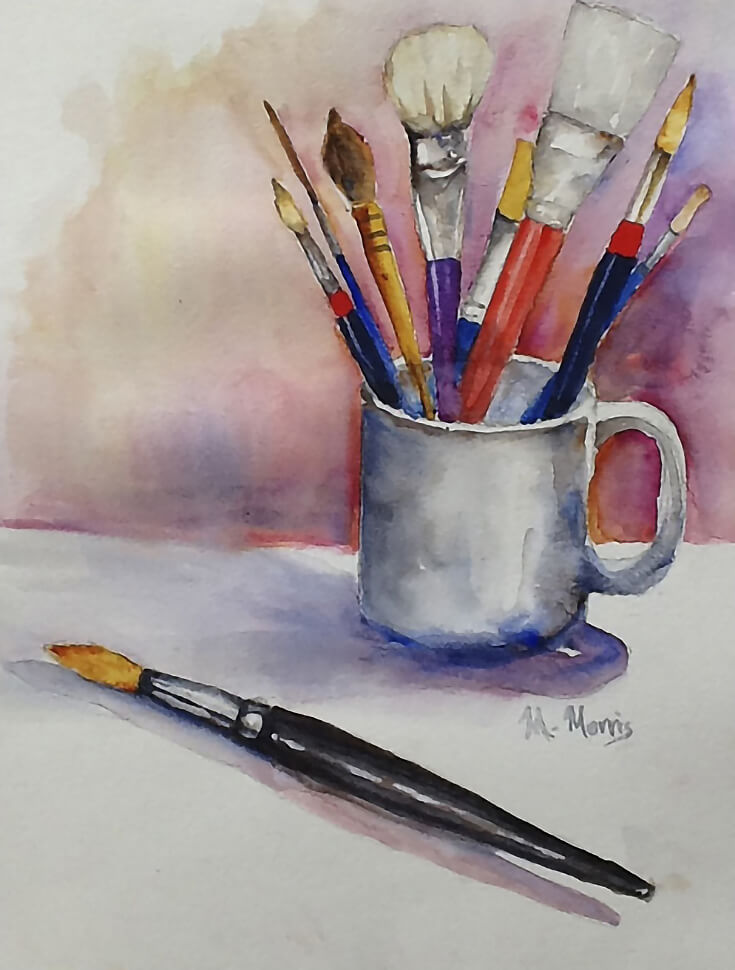
Of course, always keep in mind that a good brush makes a huge difference, but even the most expensive brush won’t paint the paintings for us or hold the magical key to painting success. Trust me on this, while your choice of brush is important, it’s only part of the equation! There is no magic brush!

So again, my advice is buy a few good brushes (three to six of them, with at least a couple sizes of rounds and flats) and add better brushes to your set as you improve and find your preferences.

Where to buy good watercolor brushes online

For good mid-range brushes I’d recommend the store brand watercolor series fromDick Blick Art Supplies or Utrecht Art Supplies. They have a large variety and since they’re online prices are usually lower, but you’ll pay shipping. Cheap Joe’s, Jerry’s Art supply and Art Supply Warehouse are good sources for brushes too.

A better brush (and my brush of choice these days) is Loew-Cornell Golden Taklonsynthetic brushes. They are inexpensive and I like their “snap” and quality. These brushes are available online at many of the retailers I just listed above.

Better yet, Winsor & Newton makes a nice set of brushes with a natural sable/synthetic blend called the Sceptre Gold ll series which are excellent for the beginner and reasonably priced. I started with these and still have and use them. They should be available online or in stores as well.

Stay tuned for my next Watercolor 101 article on the different types of paper and why paper matters. Until then, go get those brushes ready!

Did you like this article? Share it!
Then check out the related posts below.

Tuesday, July 16, 2013

Challenging Your Observation Skills!

My sketchbook challenge is on!  If you haven't read about it yet, check the previous blog or Senior Artist Article and join the fun!

The challenge is a sketch a day for 30 days.  The goal is to strengthen drawing skills.  Good drawing skills are very important if you want to draw or paint representational art.  (drawing something that looks like the object). 

The "challenge within the challenge" is just a suggestion to help you find inspiration. Last weeks was "What says summer to you?" With that challenge I've seen some wonderful work!  I thought I'd share one I did this weekend while on the road.


This sketch was done in the car as the scenes sped past.  I looked as long as I could at what interested me and then drew from memory.  First I drew the large tree in the field.  Later I saw a field with hay bales all askew.  Last I drew the flowers that dotted the roadside in the foreground.  Then I painted it with watercolor.  It's a small sketch (3x5) and I got a little too tight with my little tiny brush!  I struggle to stay loose. Time and detail are the enemy in that sense!


Drawing is all about seeing. After image drawing (what I did with this sketch) is an excellent way to strengthen observation skills.  On my Facebook page, ( just "like" Michelle Morris Art to see the feed on your page ) I issue a "challenge within the challenge" every so often.  This week I want to use after image drawing to challenge your skills a bit.   Spend 10-15 seconds looking at the photo below or use your own subject.  Then without looking draw the image.  Repeat this exercise with the same subject for a few days and see how your drawing improves!  Then post your sketches on my page and share in the fun!

Happy sketching!